
Last Updated: November 12, 2026
Quick Summary
Your stir-fry sauce separates because the starch never activated or the oil-and-water emulsion broke. Cloudy, thin sauce with liquid pooling means the starch needs 30 to 60 seconds of simmering, while a slick of oil on top means you should whisk in warm water off the heat. Treat a broken emulsion first, since it will not thicken properly no matter how long you simmer it.
- Whisk warm water into a broken emulsion one tablespoon at a time with the pan off the heat.
- Mix one tablespoon of starch with two tablespoons of cold water for a slurry.
- Use one tablespoon of starch per cup of liquid as a starting point.
- Aim for two to three tablespoons of sauce per cup of cooked ingredients.
- Add sauce at the very end, off the heat, and toss quickly to coat.
Table of Contents
- Why Homemade Stir-Fry Sauce Separates: The Two Causes
- How to Fix Separated Stir-Fry Sauce in the Pan
- How to Thicken Stir-Fry Sauce With a Starch Slurry
- How to Thicken Stir-Fry Sauce Without Cornstarch
- Ingredient Moisture and Sauce-to-Ingredient Ratio
- Stir-Fry Sauce Storage: Why It Splits After Reheating
- Prevent Separation Next Time: Wok Heat, Timing and Crowding
- Stock Your Kitchen With a Sauce That Won't Split
- Frequently Asked Questions
Why Homemade Stir-Fry Sauce Separates: The Two Causes
A homemade stir-fry sauce separates for one of two reasons: the starch never activated, or the oil-and-water emulsion broke. A watery, greasy or curdled pan of stir-fry usually traces back to one of those. Below, we explain both causes and show you exactly how to fix a separated stir-fry sauce, thicken it properly, and keep it together next time.
Here is the key distinction most guides skip. A starch-thickened sauce goes thin and cloudy because the starch did not cook. A broken emulsion goes greasy because the fat and liquid pulled apart. They look similar in the pan. They need opposite fixes.
Cause One: Starch That Never Activated
Starch needs heat and time to swell and trap liquid. Toss dry cornstarch straight into a hot wok and it clumps. Add a slurry to a pan that is too cool and it stays cloudy and thin.
The signs are easy to spot:
- The sauce looks cloudy or milky
- Liquid pools at the bottom of the pan
- You can taste raw starch
So the fix is more heat and a moment of simmering, not more starch. We will cover the exact method below.
Cause Two: A Broken Oil-and-Water Emulsion
Oil and water do not mix on their own. A sauce holds them together only when something, usually starch or a little sugar, keeps the fat suspended in tiny droplets. Push that too far with high heat, cold liquid or aggressive stirring, and the emulsion snaps.
Watch for these clues:
- A slick of oil floating on the surface
- A greasy, separated texture rather than a cloudy one
- Sauce that splits the moment it hits the pan
- A thin, watery base with fat clinging to the food
That greasy film is the giveaway. It tells you the problem is emulsification, not thickening.
How to Fix Separated Stir-Fry Sauce in the Pan
You can rescue a separated stir-fry sauce in the pan in under a minute, but the fix depends on which problem you have. Common advice is to whisk or add starch, but a broken emulsion and an unactivated starch need opposite treatments. Use this symptom-based diagnosis before you touch the pan.
Step 1: Identify the symptom
Pull the pan off the heat and look at the sauce for five seconds.
- Cloudy, milky, or thin with liquid pooling at the bottom. The starch never activated. The sauce may taste raw and coat nothing.
- A slick of oil floating on top with watery liquid underneath. The oil-and-water emulsion broke. The sauce feels greasy rather than cloudy.
- Greasy droplets clinging to the food while a thin base runs off. A partial break: some fat is still suspended, some has pooled.
- Lumps suspended in thin liquid. Dry starch seized before it could disperse.
If you see cloudiness and grease together, treat it as a broken emulsion first, then activate the starch. A broken emulsion will not thicken properly no matter how long you simmer it.
Step 2: Match the fix to the symptom
For a broken emulsion: Keep the pan off the heat. Whisk in warm water one tablespoon at a time, whisking hard between additions.
For unactivated starch: Return the pan to medium heat and simmer for 30 to 60 seconds, stirring constantly.
For lumps: Push the sauce through a fine-mesh strainer into a bowl, then return it to the pan.
For a partial break: Whisk off the heat with a splash of warm water, then add a small amount of slurry and simmer briefly.
Step 3: Confirm the fix worked
The sauce should turn glossy and coat the back of a spoon. If it still looks cloudy, it needs more heat. If it still looks greasy, it needs more whisking off the heat with warm liquid.
Watch out: adding cold water to a hot sauce shocks the fat and makes the split worse. Always use warm liquid, and never add dry starch directly to a hot pan.
How to Thicken Stir-Fry Sauce With a Starch Slurry
A common way to thicken stir-fry sauce is a starch slurry: cornstarch or corn flour whisked into cold water before it goes near the pan.
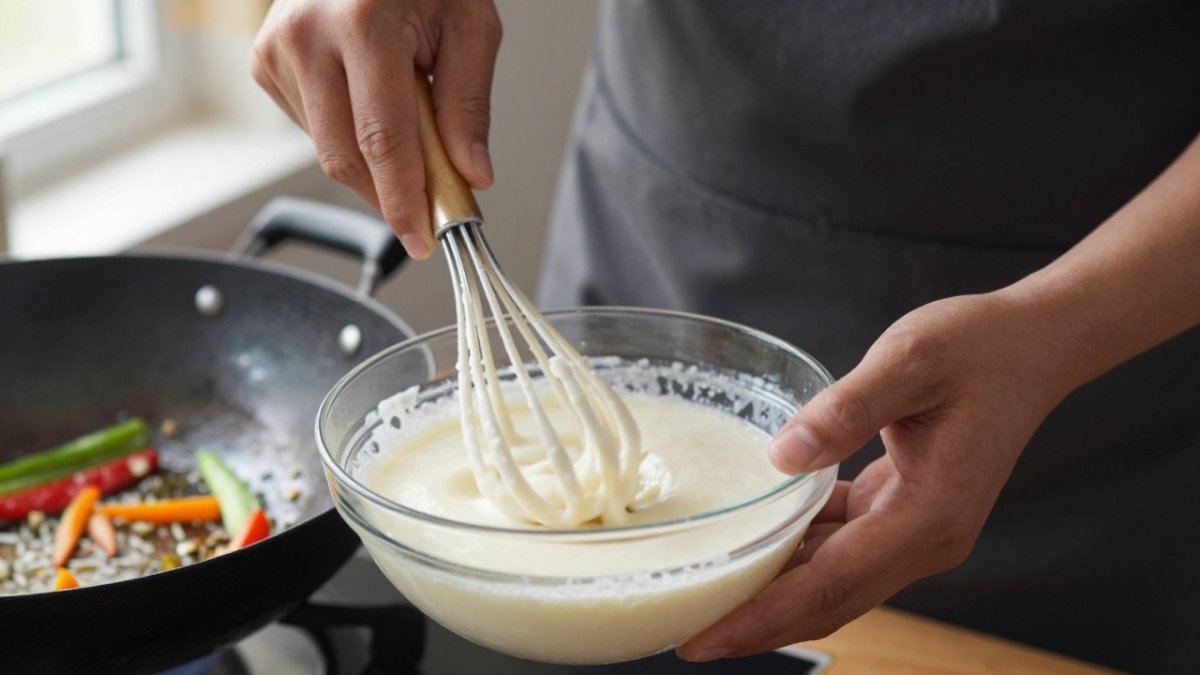
Why cold water? Cold keeps the starch grains separate. Drop dry starch into hot liquid and it seizes into lumps you cannot break up.
A few rules keep it clean:
- Use one tablespoon of starch per cup of liquid as a starting point
- Whisk the slurry again right before adding it
- Stir it in off the heat, then return the pan to the flame
- Simmer 30 to 60 seconds so the starch activates
The sauce should turn glossy and coat the back of a spoon. If it stays cloudy, it needs another few seconds of heat.
How to Thicken Stir-Fry Sauce Without Cornstarch
You can thicken stir-fry sauce without cornstarch using arrowroot, tapioca starch or a little simmered-down fruit or vegetable purée.
Arrowroot gives a clear, glossy finish and works well in delicate sauces.
Here is how the options compare:
| Thickener | Texture | Best For | Watch Out |
|---|---|---|---|
| Cornstarch | Glossy, semi-clear | Everyday stir-fry | Clumps if added dry |
| Arrowroot | Clear, glossy | Delicate, light sauces | Breaks down with long heat |
| Tapioca starch | Smooth, stretchy | Fast thickening | Can turn gummy |
| Fruit or veg purée | Soft, opaque body | Sweet or savory dishes | Adds flavor and sugar |
| Reduction | Concentrated, thin | Brothy sauces | Takes more time |
If you are avoiding cornstarch for dietary reasons and want a ready-made option, our guide to the best vegan nut-free stir-fry sauce compares clean store-bought picks side by side.
Ingredient Moisture and Sauce-to-Ingredient Ratio
Too much water from vegetables can thin a stir-fry sauce. Mushrooms, zucchini, cabbage and bean sprouts release liquid as they cook.
The fix starts with the sauce-to-ingredient ratio. Aim for roughly two to three tablespoons of sauce per cup of cooked ingredients.
Control moisture before it becomes a problem:
- Pat wet vegetables dry before they hit the wok
- Cook high-moisture vegetables first and let the water cook off
- Salt vegetables in the pan, not in a bowl, so liquid releases where you can manage it
- Keep the pan hot so water evaporates instead of pooling
In practice, this means the sauce goes in last. By then the pan is dry, hot and ready to coat.
Stir-Fry Sauce Storage: Why It Splits After Reheating
Stored stir-fry sauce can split in the fridge overnight. The reason is ingredient-specific: starch retrogrades, fat solidifies, and the water phase separates as the sauce cools. Reheating too fast or too hard then finishes the job. Understanding which ingredient is driving the split tells you how to restore the sauce.
Why it splits in the fridge
- Starch-thickened sauces weep water as the starch molecules re-align and squeeze out liquid during cooling. This is called syneresis, and it is why a cornstarch sauce looks watery the next day even though it was glossy at dinner.
- Emulsified sauces split because the fat firms up at refrigerator temperature and pulls away from the water phase. A sauce that relied on whisking alone, without starch or sugar to stabilize it, is most prone to this.
- High-oil sauces with little starch or sugar separate fastest because there is nothing holding the fat in suspension once it cools.
- High-sugar sauces can crystallize or become syrupy, which changes the texture even if the sauce does not visibly split.
How to reheat without splitting
Reheat gently over medium heat, stirring as it warms. Add a splash of warm water to loosen a thick sauce. For deeper guidance on storing and preserving artisanal sauces, see our complete guide.
For a broken emulsion, reheat off the heat with a splash of warm water and whisk hard, exactly as you would in the pan. If it stays greasy, add a pinch of starch slurry to help bind it.
Freezing and make-ahead notes
Freezing a starch-thickened sauce can cause it to weep water on thawing. If you plan to freeze, under-thicken slightly and finish the sauce after reheating. Emulsified sauces with high fat content freeze better than thin starch sauces, but they still need gentle reheating.
Watch out: reheating a cold sauce in a hot wok without stirring will split it almost every time. Warm it through first, then add it to the pan at the end of cooking.
Prevent Separation Next Time: Wok Heat, Timing and Crowding
Prevention comes down to three things: wok heat, sauce addition timing and not crowding the pan. Get these right and your stir-fry sauce holds together almost every time.
Start with a screaming-hot wok.
Next, respect crowding. Overcrowding drops the pan temperature, traps steam and turns stir-fry into a stew.
Then nail the timing. Add sauce at the very end, off the heat or on low, and toss to coat.
The prevention checklist:
- Heat the wok until a drop of water sizzles and vanishes
- Dry your vegetables before cooking
- Cook in batches to avoid steam
- Add sauce last, off the heat
Do these and the two causes we opened with, dead starch and broken emulsion, rarely get a chance to happen.
Stock Your Kitchen With a Sauce That Won't Split
Getting homemade sauce to hold together takes practice, and some nights you just want dinner on the table. Choosing oil for cooking thoughtfully can also help keep homemade sauces balanced, whether you reach for sesame or peanut oil.
Our Asian sauce bundle brings bold stir-fry flavor and is low in sugar, using no artificial sweeteners and no canola or soy oil. If you want something creamy and nut-free, our Sesame Satay sauce finishes a stir-fry beautifully, added right at the end. And our Coconut Yellow Curry sauce, our most popular flavor, is low-sugar and keto-friendly at 2g per 2 tablespoons.
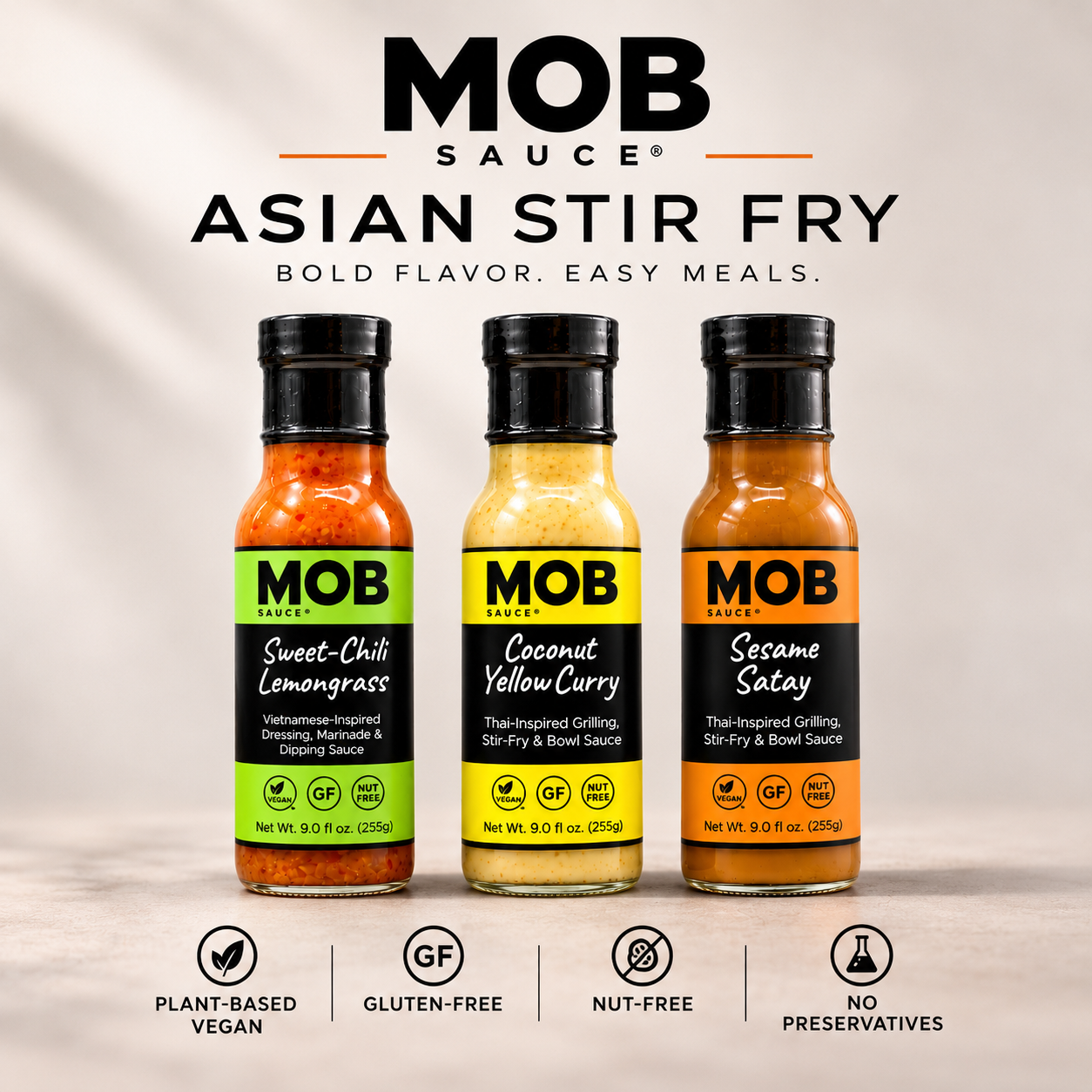
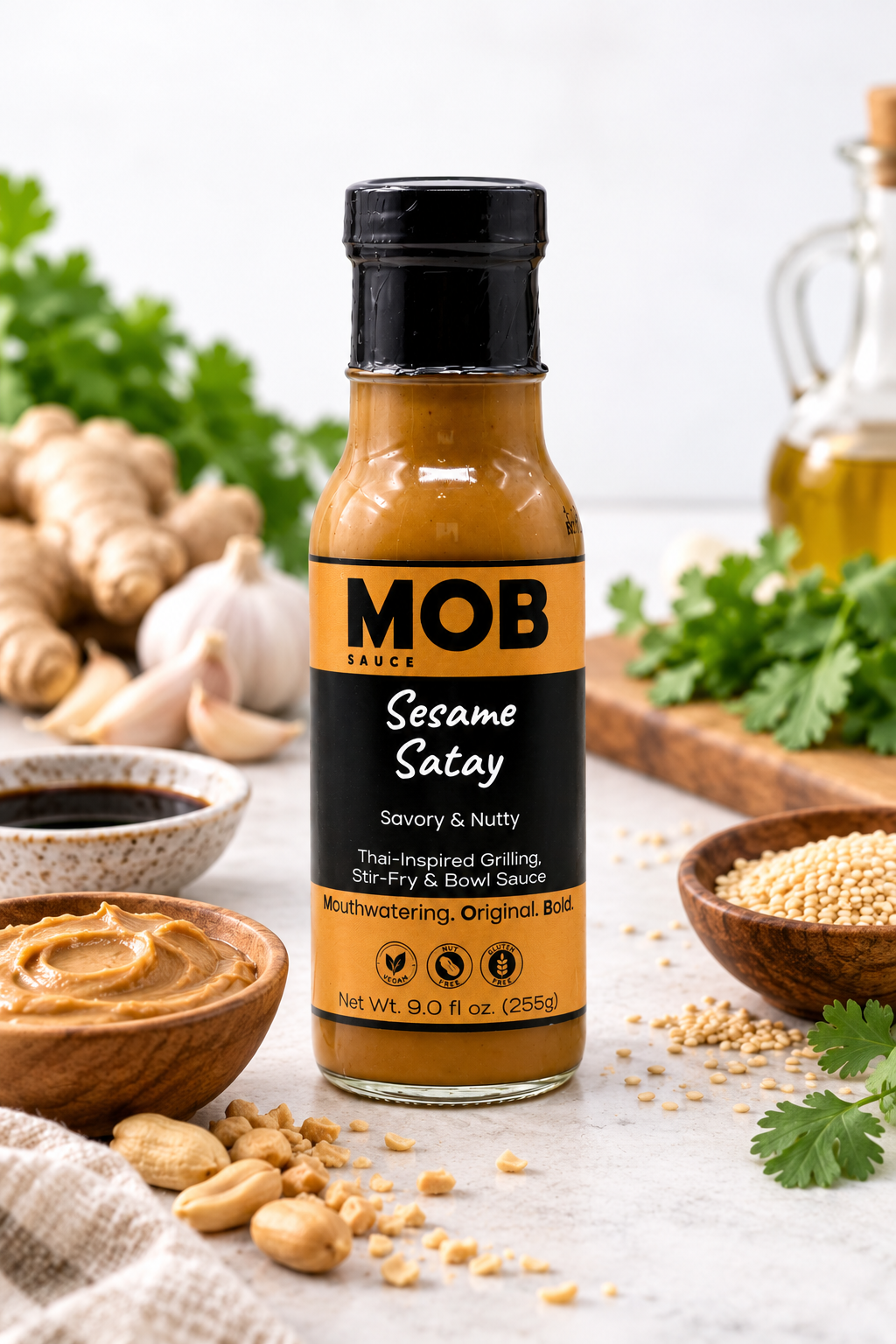
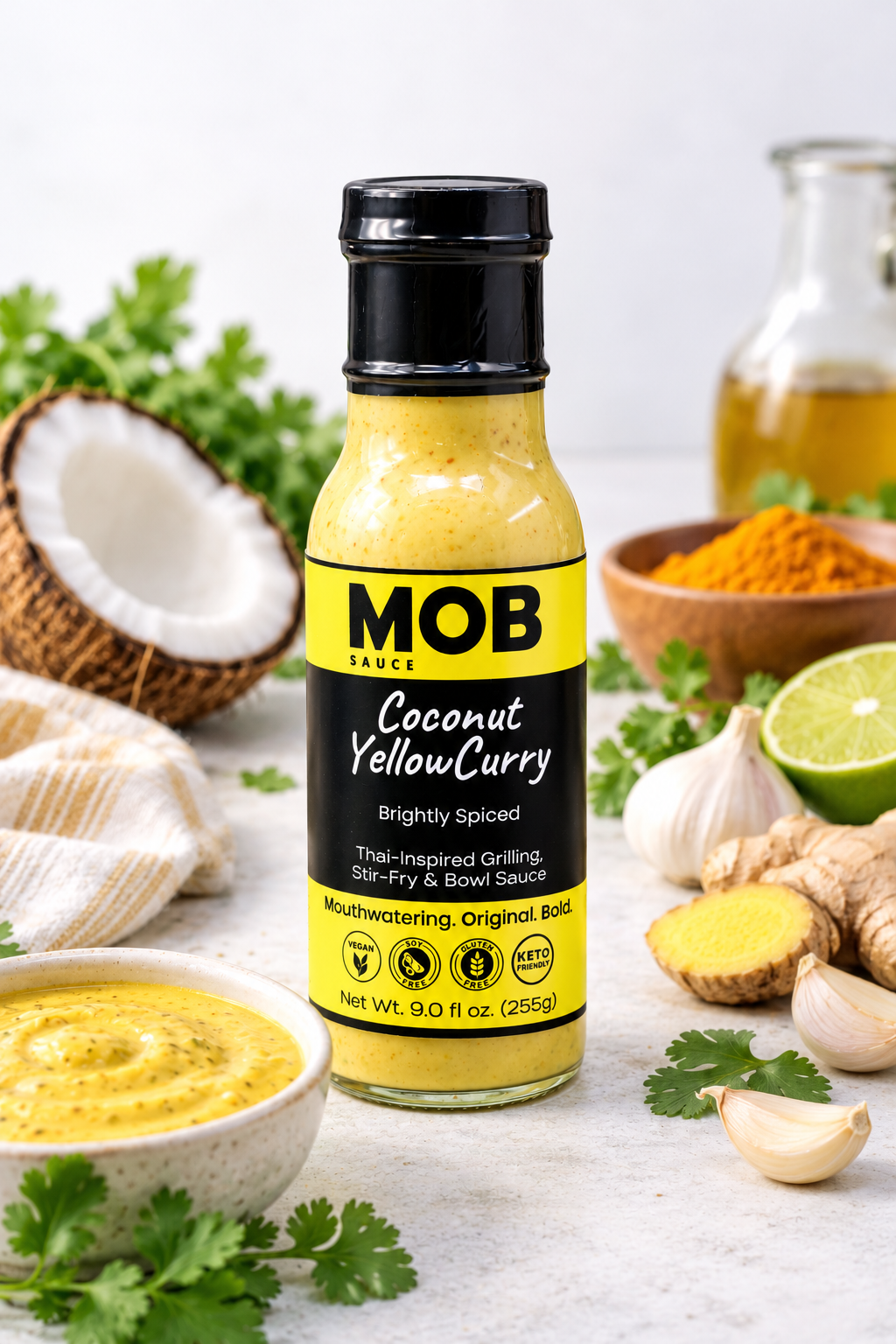
All three are certified gluten-free and certified nut-free, and are plant-based. Add them at the end of cooking, toss to coat, and serve. No slurry, no split, no guesswork.
The challenge with any stir-fry sauce is keeping it together under heat, and a clean, well-made bottled sauce removes that risk. MOB Sauce offers certified gluten-free, nut-free and plant-based sauces that finish a dish in seconds.
Frequently Asked Questions
Why does my stir-fry sauce turn watery in the pan?
Vegetables release water as they cook, and if the wok is not hot enough or is overcrowded, that water turns to steam instead of evaporating. The sauce then gets diluted faster than the starch can thicken it. Fix it by cooking in smaller batches over high heat, adding the sauce at the end, and keeping a cornstarch slurry on hand to adjust consistency right before serving.
How do I thicken stir-fry sauce without cornstarch?
Use arrowroot powder, potato starch, or tapioca starch at roughly the same ratio as cornstarch: about 1 tablespoon per cup of liquid. Arrowroot gives the glossiest finish but breaks down if boiled hard, so add it off the heat. A small amount of tahini or a spoon of sesame paste also adds body.
Can I fix a separated stir-fry sauce after it has been stored and reheated?
Yes. Starch-thickened sauces often set solid in the fridge and release water when reheated too fast. Warm the sauce gently over low heat, whisking constantly, and add a splash of warm water to loosen it. If it still looks split, whisk in a fresh half-teaspoon of slurry per cup of sauce. Reheat only what you plan to eat, since repeated cycles break the texture down further.
When should I add stir-fry sauce to the pan?
Add it at the very end, once the protein and vegetables are cooked and the pan is still hot. Pour it around the rim of the wok rather than into the center, toss for 30 to 60 seconds until it coats everything, and take the pan off the heat. Sauces added too early simmer and lose their gloss, and high-sugar sauces can scorch before the vegetables are done.

